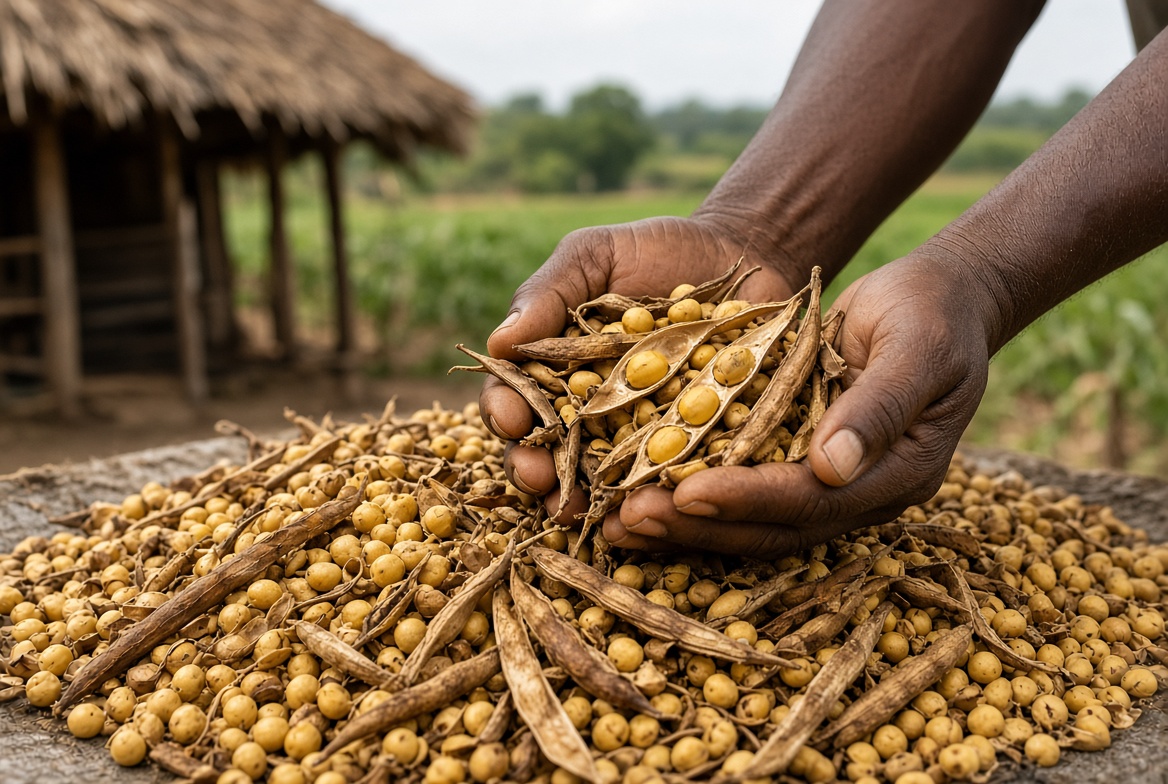
Soya bean (soybean, Glycine max) has risen to become one of Zambia’s most significant agricultural crops after maize. It is valued for its high protein content (around 40%), oil content (about 20%), versatility in food and feed, and ability to improve soil fertility through biological nitrogen fixation. In recent years, soya beans have ranked as the second most important crop by area planted in many seasons, with production expanding rapidly as both smallholder and commercial farmers respond to rising demand from the livestock, poultry, aquaculture, and processing sectors.
The crop supports rural livelihoods, contributes to national food and nutrition security, and offers strong potential for value addition and exports. National strategies aim to increase production toward one million tonnes to meet domestic needs for soya cake, edible oil, and other products while growing export volumes. Small-scale farmers have become the dominant producers in terms of area, accounting for a large and growing share of output.
The crop supports rural livelihoods, contributes to national food and nutrition security, and offers strong potential for value addition and exports. Under the Government’s Grow Zambia Agenda (framed as the 10-10-5-3-3-1-1-1 targets), one of the key production goals is 3 million metric tonnes of soya beans. This ambitious national target reflects the crop’s strategic importance in economic diversification, feed security, agro-processing, and export growth. Earlier strategies had aimed for 1 million tonnes; the elevated 3-million-tonne goal signals a major scaling-up of the sector.
This article is a supporting guide within our broader coverage of crop production. For a full overview of major crops, farming systems, agro-ecological zones, and opportunities across the country, see our pillar page: Crop Farming in Zambia.
Brief History and Rise of Soya Beans in Zambia
Soybeans were first cultivated in what is now Zambia (then Northern Rhodesia) around 1910. For much of the 20th century, production remained limited. Interest grew from the late 20th century onward as commercial farming expanded and demand for protein-rich feed increased with the growth of the poultry industry.
In the past two decades, production has accelerated. Smallholder adoption has risen steadily, supported by improved varieties, extension efforts, market opportunities, and the crop’s suitability in rotation with maize. By the early 2020s, soya beans had become a major cash crop for hundreds of thousands of small-scale farmers. Production peaked in some recent seasons near or above 700,000–760,000 tonnes before fluctuating due to weather, prices, and planting decisions. Yields and area have varied, with commercial farms typically achieving higher productivity than smallholders.
Economic and Nutritional Importance
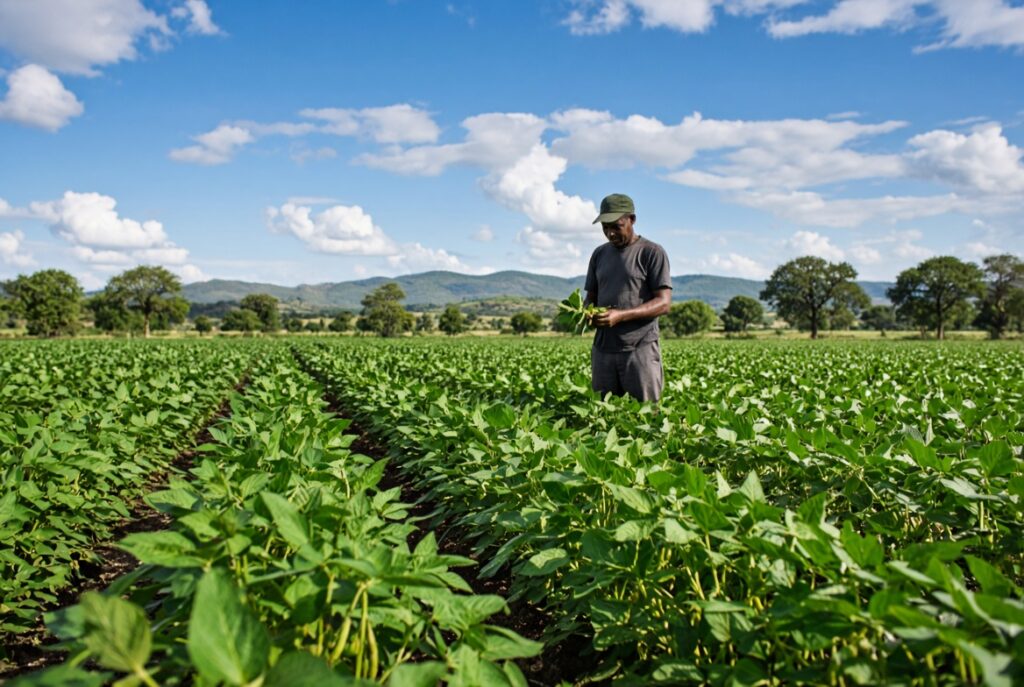
Soya beans serve multiple purposes. Domestically, the majority of production is processed into soya meal or cake for animal feed (especially poultry and aquaculture) and into edible oil. The remainder supports human food products such as soya chunks, flour, milk, porridge, and protein supplements. Rising livestock and fish farming has driven strong demand and supported prices in many years.
The crop generates income for farmers, creates employment in aggregation, transport, processing, and related services, and contributes to foreign exchange through exports of beans, cake, and oil. It also plays a key role in sustainable farming systems by fixing atmospheric nitrogen, reducing the need for synthetic nitrogen fertiliser on subsequent crops (particularly maize), and improving soil structure when grown in rotation.
Nutritionally, soya beans provide high-quality protein, essential amino acids, oil, and other nutrients. Local processing into affordable protein-rich foods supports household nutrition and school feeding or health programmes.
Agro-ecological Suitability and Climate Requirements
Soya beans grow well across much of Zambia but perform best in Agro-ecological Regions II and III, which receive roughly 800–1,000 mm of rainfall during the growing season. Adequate and well-distributed moisture is critical, especially during flowering and pod filling; dry spells at these stages sharply reduce yields. Excess water that causes waterlogging can impair nodulation and root health.
Optimum temperatures are generally 22–35°C. The crop does not germinate reliably below about 10–14°C. It is photosensitive, meaning day length influences flowering; delayed planting shortens the vegetative phase and lowers yield potential.
Main production areas include Central, Eastern, and Copperbelt provinces, with significant activity and expansion potential in parts of Lusaka, Southern, and other provinces. The crop tolerates a range of elevations and conditions found across these zones when management is appropriate.
Soil Requirements and Land Preparation
Soya beans prefer well-drained soils with good structure, ranging from sandy loam to clay loam and relatively high in organic matter. They perform poorly on weak sands or poorly drained, waterlogged soils. Ideal soil pH is typically in the range of about 5.0–6.5 (some guides cite 5.5–6.5 or slightly higher). Acidic soils benefit from liming based on soil test results.
Land preparation should aim for a fine, firm, weed-free seedbed. Conventional tillage (ploughing followed by discing or harrowing) is common. Conservation agriculture approaches, including reduced tillage where appropriate, can also succeed. Preparation is ideally completed by mid-December so that planting can occur on time. Poor preparation increases risks of poor germination, erosion, weed pressure, and harvest losses.
Recommended Varieties
A range of improved varieties is available from seed companies such as Zamseed, Seed Co, and others. Choice should consider maturity period, yield potential, disease resistance, lodging and shattering resistance, seed size, and whether the variety is promiscuous (nodulates with native rhizobia) or non-promiscuous (benefits strongly from inoculation).
Commonly grown or recommended varieties include Safari, Spike (SC Spike), Dina, Lukanga, Kafue, Magoye, Kaleya, and newer releases such as Serenade, Sentinel, Status, and SC SZ02. Maturity periods generally range from about 90–135 days. Potential yields under good management often reach 2–4 tonnes per hectare or higher for some varieties, though actual farm averages are lower.
Farmers are advised to use certified seed for best results. Recycled (farm-saved) seed can be used but should be cleaned and germination-tested, as viability declines relatively quickly compared with some other crops. Planting high-quality seed of a well-adapted variety is one of the most cost-effective ways to improve performance.
Seed Rate, Treatment, and Inoculation
Recommended seed rates typically fall between 80–110 kg per hectare (sometimes 75–120 kg/ha depending on variety, seed size, and target population). Target plant populations are often in the range of 300,000–400,000 plants per hectare.
Seed treatment with fungicide and/or insecticide protectants helps control soil-borne diseases and early insect damage. Commercial seed treatments are widely available.
Inoculation with the correct rhizobium strain is highly recommended, especially for non-promiscuous varieties and on fields without a recent history of successful soya bean cultivation. The inoculant enables the plant to form nodules and fix atmospheric nitrogen, reducing or eliminating the need for nitrogen fertiliser. Follow label instructions carefully: mix with a sticker (often a sugar solution), apply evenly to seed, and plant promptly (usually within a day or two). Inoculant is relatively inexpensive and delivers strong returns when used correctly. Leftover treated seed should be stored cool and used quickly.
Planting Practices
The ideal planting window is generally mid-November to mid- or late December. In higher-rainfall areas (Northern, Muchinga, Luapula, Copperbelt, North-Western), planting can extend into early January. Earlier or later planting outside the optimal window usually reduces yields because of the crop’s sensitivity to day length and moisture patterns. Avoid dry planting where possible, as the high oil content of the seed makes it sensitive.
Planting can be done on the flat or on ridges. Common row spacing is 30–50 cm (sometimes up to 75 cm), with intra-row spacing around 5 cm or roughly 14–16 seeds per metre of row. Planting depth of 2.5–5 cm is optimal. Uniform depth and spacing support even emergence and canopy development. Mechanised planters improve precision on larger farms; hand planting or simple planters are common among smallholders.
Fertilisation and Soil Fertility Management
Because well-nodulated soya beans fix most of their own nitrogen, nitrogen fertiliser is generally unnecessary or needed only in small starter amounts. The main nutrient requirement is phosphorus. Basal applications of Compound D or specialised soya blends are common. Rates often range from about 100–400 kg per hectare depending on soil fertility and test results (lower on fertile soils or after good rotations; higher on depleted soils). Placement near the seed (but not in direct contact in excessive amounts) at planting is effective.
Potassium, sulphur, and micronutrients may also be beneficial on deficient soils. Foliar feeds are sometimes applied around flowering or when deficiency symptoms appear. Lime should be applied according to soil test recommendations to correct acidity. Soil testing remains the best guide for precise nutrient management.
Soya beans fit well in rotation with maize and other cereals. The nitrogen fixed and residual benefits improve subsequent crop performance and can reduce fertiliser costs over the rotation cycle.
Weed Management
Weeds compete strongly with soya beans, especially in the first 4–6 weeks. Effective control is essential for high yields. A combination of cultural, mechanical, and chemical methods works best.
Pre-plant or pre-emergence herbicides (e.g., glyphosate for clean-up, metolachlor or similar for residual control) are widely used. Post-emergence selective herbicides help control broadleaf weeds and grasses once the crop is established. Always follow label rates, timings, and safety guidelines. Mechanical weeding or hand weeding can supplement chemical control, particularly on smaller fields. Maintaining a clean seedbed and timely canopy closure further suppresses weeds.
Pest and Disease Management
Regular scouting is important because pests and diseases can attack from seedling stage through to maturity.
Common insect pests include cutworms, termites, bean leaf beetles, aphids, loopers, caterpillars (including fall armyworm in some seasons), stink bugs, and grasshoppers. Seed treatments and foliar insecticides (applied according to thresholds and recommendations) help manage them. Integrated approaches that include scouting, cultural practices, and selective chemical use are preferred.
Important diseases include red leaf blotch (Pyrenochaeta glycines), frog-eye leaf spot, bacterial blight and pustule, downy mildew, anthracnose, and various seedling blights or root diseases. Many improved varieties offer useful resistance or tolerance. Seed treatment fungicides protect against early soil- and seed-borne problems. Foliar fungicides may be needed during the season if disease pressure is high (e.g., products containing active ingredients such as azoxystrobin, tebuconazole, or others recommended locally). Crop rotation, clean seed, and residue management reduce inoculum levels.
Always use registered products at recommended rates, observe pre-harvest intervals, and prioritise integrated pest management to protect beneficial organisms, reduce resistance risk, and manage costs.
Harvesting, Threshing, and Post-Harvest Handling
Most varieties mature in 90–135 days. Harvest when pods are dry and seed moisture is approximately 10–12%. Timely harvesting is critical—delayed harvest increases losses from shattering, weathering, or mould, especially with varieties prone to pod shatter.
Smallholders commonly harvest by hand (pulling or cutting plants) and thresh by beating or using simple machines. Commercial operations use combine harvesters. After threshing, clean the grain, dry further if needed to safe storage moisture, and store in clean, dry, well-ventilated conditions protected from pests and moisture. Proper post-harvest handling preserves quality and market value.
Yields and Closing the Productivity Gap
Under good management, yields of 2–4 tonnes per hectare are achievable. National and smallholder averages have often been lower (around 1–1.5 t/ha or less in many cases), while well-managed commercial farms commonly reach 2–2.8 t/ha or higher. The gap is driven mainly by late planting, low-quality or recycled seed without inoculation, inadequate phosphorus, poor weed control, suboptimal plant populations, and limited use of other improved practices.
Closing this gap through better agronomy offers large returns. Demonstration plots and farmer training consistently show that timely planting, certified seed + inoculant, adequate phosphate, and good weed control can substantially raise yields even on smallholder fields.
Marketing, Prices, and the Value Chain
Farmers sell through multiple channels: farm-gate buyers, small and medium aggregators (“briefcase” buyers), larger traders, and direct sales or contracts with processors. Processors and larger buyers typically offer higher prices than informal aggregators, but access can be limited by location, volume, transport costs, and quality standards. Prices fluctuate with domestic supply, regional demand, and international trends; they have varied widely in recent years.
Major processors and feed manufacturers include companies involved in oil extraction, soya cake/meal production, and animal feed. Value-added products (oil, cake, chunks, flour, porridge) command higher prices than raw beans. Opportunities exist in improved aggregation, quality-based pricing, contract farming, warehouse receipt systems, and local processing for both feed and human food markets. Exports of beans, cake, and oil contribute to foreign earnings.
Challenges
Key constraints include:
- Low average yields among smallholders due to suboptimal practices and limited access to quality inputs.
- Variable and sometimes low farm-gate prices, market power imbalances, and limited bargaining power for small volumes.
- Capital and credit constraints limiting investment in seed, fertiliser, inoculant, herbicides, and mechanisation.
- Knowledge gaps and uneven extension coverage.
- Climate risks (erratic rainfall, dry spells, occasional excess moisture).
- Soil acidity and declining fertility in continuous cereal systems.
- Post-harvest losses and limited local value-addition capacity in some areas.
- Occasional shortages or high cost of inoculant and certified seed.
Opportunities and Outlook
Demand continues to grow with the livestock and aquaculture sectors. Government and partner programmes (including value-chain upgrading strategies supported by organisations such as FAO and UNIDO) focus on raising productivity, strengthening linkages, improving access to inputs and finance, and expanding processing and markets. Crop rotation benefits, relatively good profitability under proper management, and the crop’s role in diversification make soya beans attractive for many farming systems.
With continued investment in improved seed systems, inoculant supply, farmer training, soil health, and market infrastructure, Zambia is well positioned to expand sustainable soya bean production, improve farmer incomes, strengthen the feed and food industries, and increase exports.
Practical Best-Practice Checklist for Farmers
- Conduct a soil test and correct pH/nutrient deficiencies as needed.
- Select a suitable, high-yielding variety adapted to your area and maturity needs.
- Use certified seed and inoculate non-promiscuous varieties properly.
- Prepare a good seedbed and plant on time within the recommended window.
- Apply adequate basal phosphorus fertiliser at planting.
- Achieve target plant population with correct spacing and depth.
- Control weeds early and effectively.
- Scout regularly for pests and diseases and intervene based on thresholds.
- Harvest promptly at the right moisture content and handle carefully post-harvest.
- Rotate with maize or other cereals to capture residual nitrogen benefits.
- Keep records of costs, yields, and sales to evaluate profitability and improve over time.
- Seek advice from local extension officers, seed company agronomists, or farmer organisations.
Soya bean farming offers Zambian farmers a profitable and sustainable opportunity when managed with attention to timing, quality inputs, and sound agronomic practices. By closing existing yield gaps and strengthening market linkages, the sector can continue to deliver substantial benefits for producers, the wider economy, and national food and feed security.